The Sticky-Note Empire: How Main Street Shops Are Quietly Out-Organizing the Competition
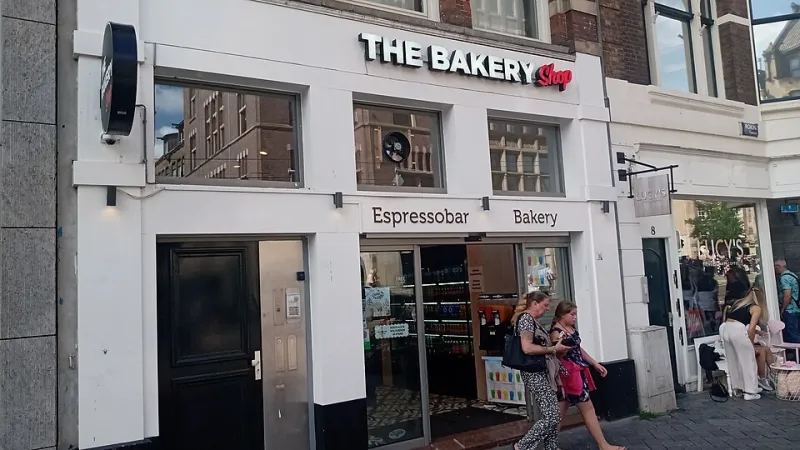
Photo: Donald Trung Quoc Don (Chữ Hán: 徵國單) - Wikimedia Commons - © CC BY-SA 4.0 International.(Want to use this image?)Original publication 📤: --Donald Trung 『徵國單』 (No Fake News 💬) (WikiProject Numismatics 💴) (Articles 📚) 13:00, 17 August 2021 (UTC), CC
Walk behind the counter of nearly any beloved local business and you'll find it: the system. A corkboard of appointment cards. A spiral notebook with tomorrow's supply order. A spreadsheet—bless it—last updated by the owner's niece, who went back to college in August.
We tend to romanticize this. There's something charming about a bakery that runs on intuition and index cards. But charm doesn't show up in a profit-and-loss statement, and lately, the gap between the shops that got organized and the shops that got by has started to widen in a way that's hard to ignore.
Integration stopped being a tech-company luxury a while ago. On Main Street, it's quietly becoming the edge.
The Patchwork Problem Nobody Budgets For
Here's what fragmentation looks like in practice. A salon books appointments in one app, sells retail products through a separate register, tracks inventory by walking to the back room and counting, and chases no-shows with whatever time is left at the end of the day. Nothing talks to anything. Every connection between those systems runs through a human being with a full day of clients ahead of her.
A contractor friend of mine ran his business this way for a decade—quotes in email, schedules on a whiteboard, invoices typed up Sunday nights. When I asked how much time the admin side ate, he thought about it and said, "Ten hours? Twelve? I stopped counting because it made me sad."
That's the hidden tax on small business: not one big cost, but a thousand small leaks. Missed follow-ups. Double-booked Saturdays. Reordering supplies you already had because nobody could find the last count.
What Happens When the Systems Actually Sync
The transformation stories follow a pattern, and it's worth noticing how unglamorous the wins are.
A bakery owner in North Carolina connected her online pre-orders, her inventory, and her point-of-sale system. Nothing futuristic—just systems that shared information. The immediate result: she stopped baking to guesswork. Weekend waste dropped noticeably within the first month because the order data told her, precisely, how many sourdough loaves Saturday actually wanted. Her words: "I used to throw away money in a bread bag."
A two-chair barbershop in Ohio wired online booking to automated reminders and synced its payment system to daily totals. No-shows—salon and barbershop owners' oldest nemesis—fell by more than half. That's not a productivity stat; that's four or five paid appointments a week that used to evaporate.
And my contractor friend? He consolidated scheduling, quoting, and invoicing into one connected system. The Sunday-night invoice ritual is gone. He gets paid about a week faster on average, because invoices now go out the same day the job wraps. He also stopped double-booking himself, which his marriage apparently appreciates.
None of these owners became tech companies. They just stopped being the middleman between their own tools.
Why This Is the New Competitive Advantage
Big chains have had integrated systems for years—centralized inventory, unified payments, scheduling software that runs hundreds of locations. That was their structural advantage. What's changed is that the same synchronization is now affordable for a business with three employees and a parking lot of six spaces.
Which means the moat is shifting. When a customer can book online with the shop downtown at 10 p.m., get a reminder, pay by tap, and get a receipt that lands in the owner's books automatically—why would they tolerate the friction of the place that still requires phone tag? Convenience compounds. So does its absence.
There's a second, quieter advantage: the synced shops can see their business. The bakery owner knows her best-selling Tuesday item. The salon owner knows which service makes the most per hour of chair time. The contractor knows which jobs actually pay after materials. Owners running on sticky notes are guessing; owners running on synced data are deciding.
Where Any Local Business Can Start
You don't need to boil the ocean. Three moves cover most of the ground:
Connect scheduling to reminders. Missed appointments are pure lost revenue, and automated confirmations recover an astonishing share of them. This is usually the fastest win available.
Unify payments and records. If your sales data lives in a register and your books live somewhere else, every week ends with manual reconciliation. Sync them and your Saturday-night paperwork shrinks to a glance.
Make inventory watch itself. Whatever you sell—retail products, job materials, pastry flour—tie re-order visibility to actual sales data. Running out of your best seller in July is a systems failure, not bad luck.
Start with the leak that hurts most, fix it, and let the confidence build. The shops winning on Main Street right now aren't the ones with the most apps. They're the ones whose tools finally work as one system—so the owner can go back to doing the thing customers actually line up for.
The sticky notes had a good run. But the future of Main Street belongs to the businesses that run in sync.